
There's something undeniably magical about afternoon tea. The delicate clink of fine china, the aroma of freshly brewed leaves, and the sight of tiered stands laden with scones, finger sandwiches, and petit fours: it all whispers of a more elegant era. But have you ever wondered how this beloved tradition actually began?
If you've ever sipped tea from a dainty cup and felt transported to another time, you're tapping into a ritual that's nearly two centuries old. Let's take a journey back to Victorian England and discover how one woman's afternoon hunger pangs sparked a tradition that continues to captivate the world today.
The Duchess Who Changed Everything
The story of afternoon tea begins with a rumbling stomach and a rather long wait until dinner.
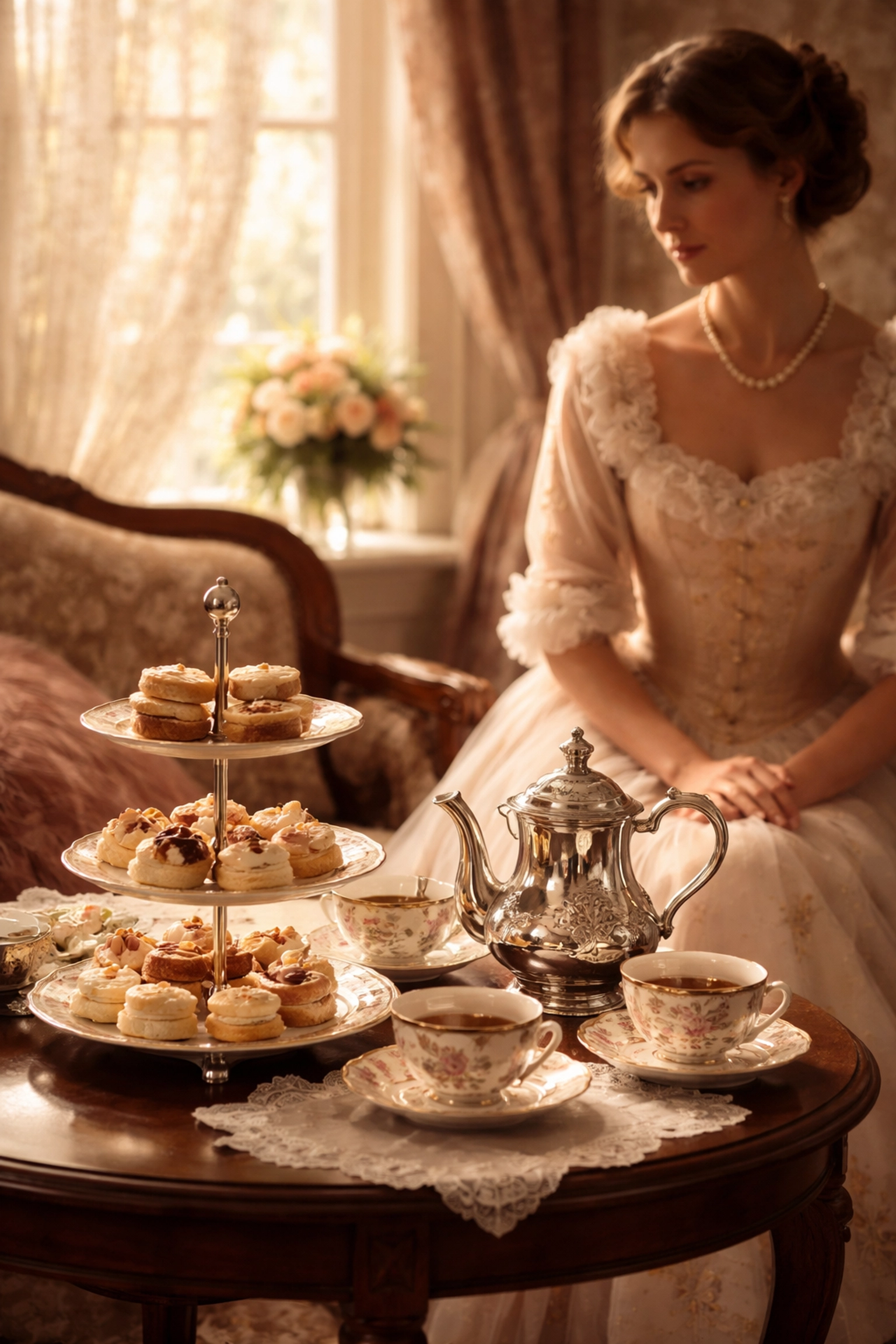
In the early 1840s, Anna Maria Russell, the 7th Duchess of Bedford, found herself facing a common problem among the Victorian aristocracy. Dinner was being served later and later in the evening: sometimes as late as 9pm: thanks to the newfound luxury of gas lighting that extended social hours well into the night. Meanwhile, lunch remained fixed at midday, leaving a gaping void of several hours with nothing to eat.
The Duchess described experiencing a "sinking feeling" around 5 o'clock each afternoon. Rather than suffer in silence, she took matters into her own hands. She began requesting that her servants bring tea, bread, butter, and cake to her private rooms each afternoon to tide her over until the evening meal.
What started as a personal remedy soon became a social affair. The Duchess began inviting friends to join her for these afternoon refreshments, and the practice caught on like wildfire among the upper classes. By the 1850s, afternoon tea had become an established institution in aristocratic circles: a fashionable ritual that no self-respecting hostess could ignore.
Tea's Royal Journey to England
Of course, the Duchess couldn't have invented afternoon tea without the beverage itself. So how did tea become such a staple in England in the first place?
For that, we must travel back even further: to 1662, when a Portuguese princess named Catherine of Braganza arrived in England to marry King Charles II. Catherine was already an avid tea drinker, having grown up with the custom in Portugal, where tea had been introduced through trade with China.
Upon her arrival at the English court, Catherine brought with her a chest of tea as part of her dowry and promptly introduced the drink to the aristocracy. She hosted what is believed to be the first recorded tea party in England, and her enthusiasm for the beverage quickly made it fashionable among the nobility.
However, tea remained a luxury for many years. Import duties were extraordinarily high: at one point reaching a staggering 119 percent: making tea affordable only to the wealthy elite. It wasn't until taxes decreased and the East India Company expanded its trade operations that tea became more accessible to the broader population.
By the Victorian era, tea had transformed from an exotic curiosity into a national obsession.
More Than Just a Cuppa: The Social Significance of Afternoon Tea
Afternoon tea was never simply about satisfying hunger or enjoying a nice cup of tea. It was a carefully orchestrated social performance: a mark of status, refinement, and cultural sophistication.
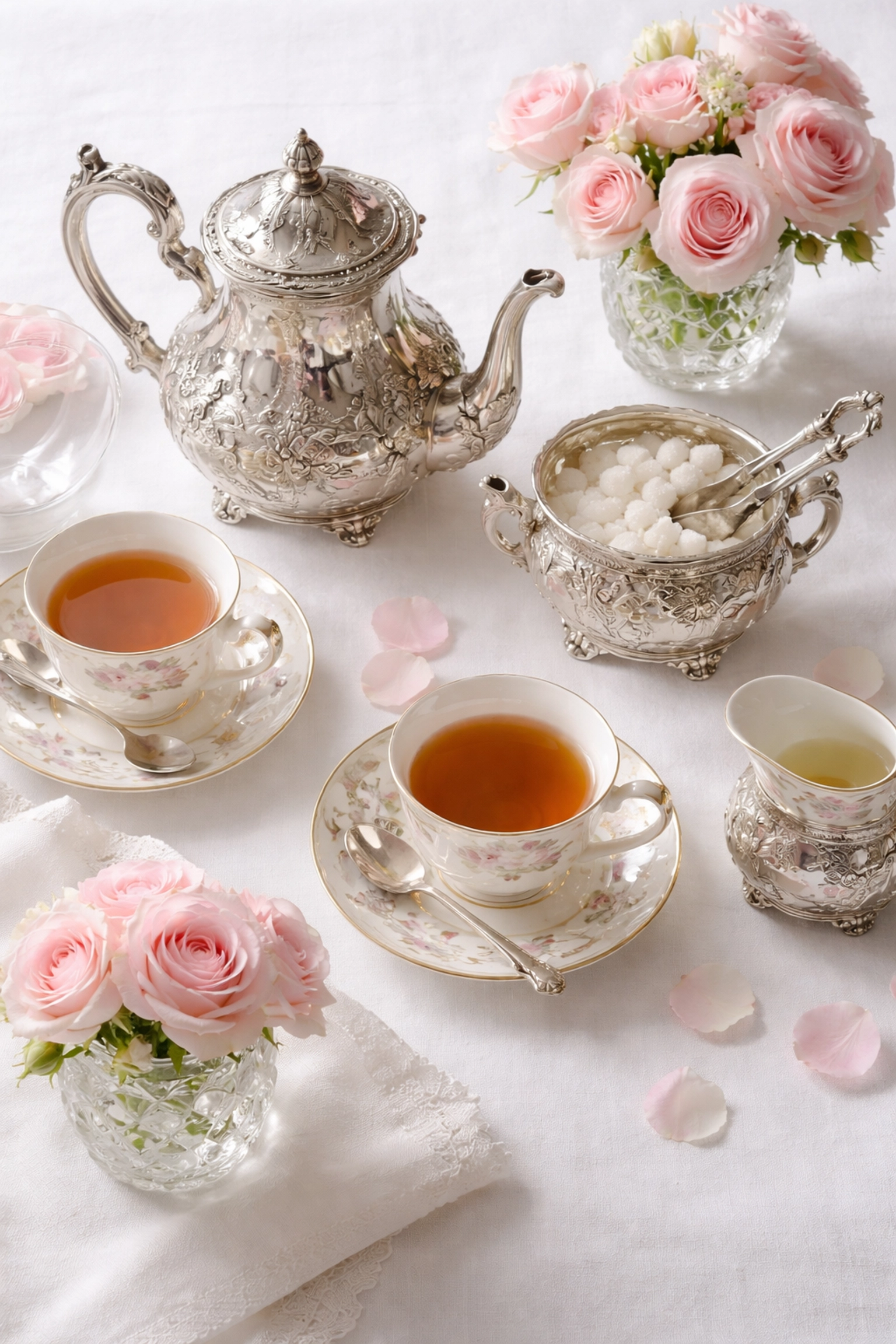
For the Victorian upper and middle classes, hosting afternoon tea was an opportunity to display one's wealth and taste. The finest china, polished silverware, embroidered linens, and an array of beautifully prepared foods all communicated a family's position in society. By the 1850s, specialized silver tea wares had become fashionable accessories, including ornate hot-water kettles, delicate sugar tongs, and elaborate cake baskets.
But perhaps the most revolutionary aspect of afternoon tea was its impact on women's lives.
During the Victorian era, women faced strict limitations on their independence and movement. They couldn't dine alone in restaurants or gather in public spaces without a male chaperone. Tea rooms, which began opening in the 1860s, changed everything. These establishments provided one of the few socially acceptable venues where women could meet friends, conduct conversations, and enjoy a meal without the presence of men.
Afternoon tea became a space of relative freedom: a time when women could gather, gossip, discuss ideas, and build social networks. In many ways, the humble tea party was quietly revolutionary.
The Essential Elements of Victorian Afternoon Tea
So what exactly did a proper Victorian afternoon tea look like? While customs varied among households, certain elements became standard:
The Tea
Black tea was the beverage of choice, with popular varieties including Earl Grey, Darjeeling, and Assam. Tea was brewed in fine porcelain or silver teapots and served with milk, sugar, and sometimes lemon. The quality of one's tea service said everything about one's social standing.
The Food
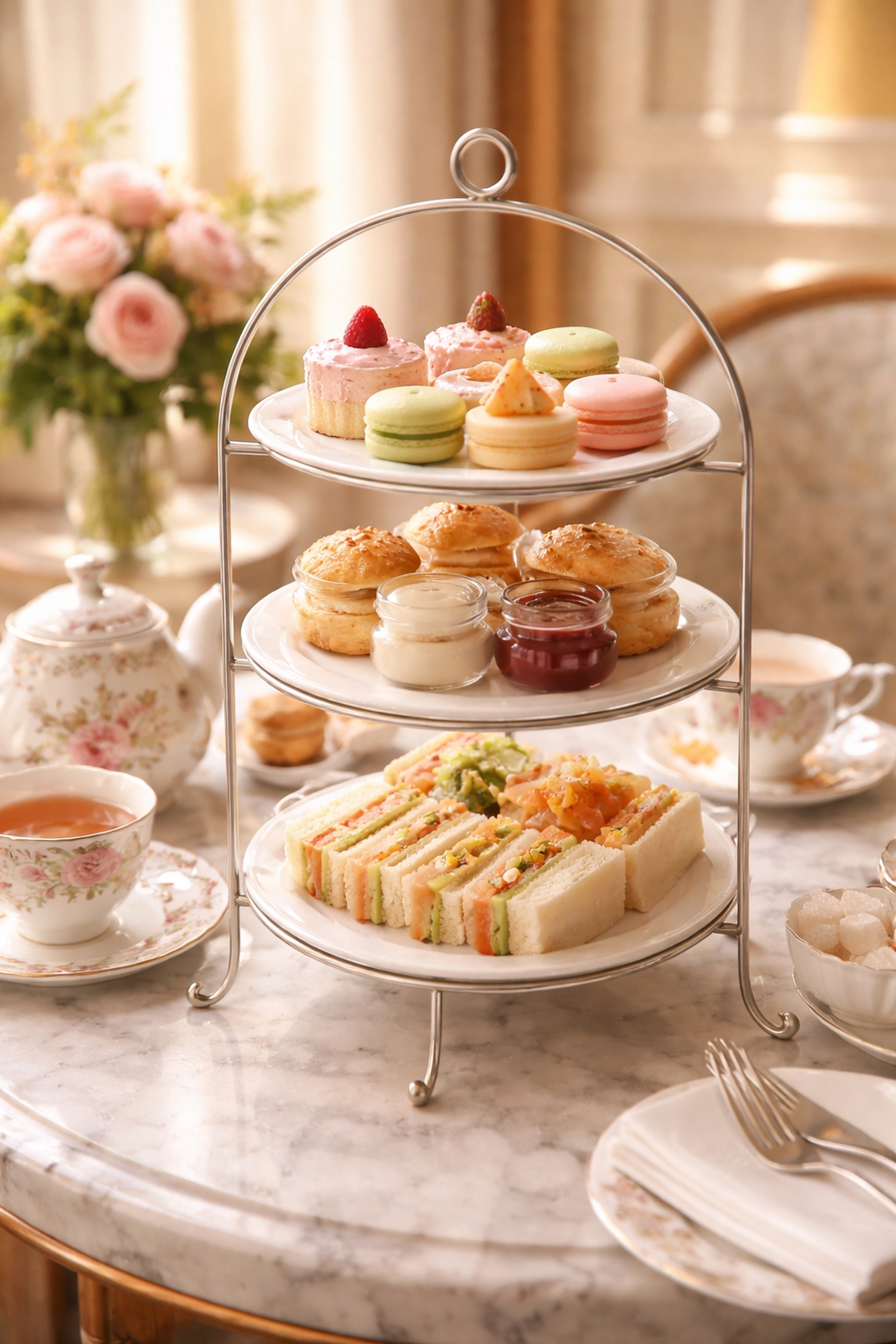
Traditional afternoon tea featured a carefully curated selection of treats, typically served on tiered stands:
- Finger sandwiches with fillings like cucumber, egg salad, smoked salmon, and cream cheese
- Scones served warm with clotted cream and jam (the eternal debate of cream-first versus jam-first continues to this day)
- Sweet treats including pastries, petit fours, tarts, and delicate cakes
The food was designed to be eaten elegantly with the fingers: no messy business allowed.
The Setting
Afternoon tea was typically held in the drawing room or garden, with guests seated on comfortable furniture around low tables. Fine china, silver utensils, and crisp white linens were essential. Fresh flowers often adorned the table, adding a touch of natural beauty to the occasion.
From Aristocratic Parlours to Iconic Tea Rooms
As the 19th century progressed, afternoon tea evolved from a private aristocratic custom into a more widely accessible experience. Famous establishments like Fortnum & Mason, The Ritz, and Brown's Hotel opened dedicated tea rooms, allowing the middle classes to partake in this elegant tradition.
Hotels and department stores recognized the commercial potential of afternoon tea and began offering it as a refined experience for their clientele. These establishments helped democratize the custom, making it available to anyone who could afford the price of admission: not just those born into privilege.
The tradition also spread throughout the British Empire, taking root in countries from India to Australia. Each region added its own local flavours and customs, creating unique variations on the original theme.
Why Afternoon Tea Still Captivates Us Today
Nearly two centuries after the Duchess of Bedford first requested tea and cake in her chambers, afternoon tea remains as popular as ever. In fact, it's experiencing something of a renaissance.
Perhaps it's the appeal of slowing down in our fast-paced world. Perhaps it's the nostalgia for a more gracious era. Or perhaps it's simply the irresistible combination of excellent tea, delicious food, and good company.
Whatever the reason, afternoon tea offers something increasingly rare: an invitation to pause, savour, and connect. It's a ritual that encourages mindfulness and presence: a welcome antidote to our screen-dominated lives.
Experience the Tradition for Yourself
You don't need to be a Duchess to enjoy the pleasures of afternoon tea. Whether you're hosting friends at home or treating yourself to a special outing, this elegant tradition is more accessible than ever.
At Britalicious, we're passionate about bringing authentic British afternoon tea experiences to your table. From traditional scones and clotted cream to classic English baked goods, we offer everything you need to host your own elegant gathering: or simply enjoy a quiet moment of indulgence.
After all, some traditions are worth preserving. And afternoon tea? It's absolutely one of them.