
There's something undeniably magical about a proper tea party. The delicate clink of fine china, the aroma of freshly brewed tea, and a tiered stand overflowing with scones and finger sandwiches: it's a tradition that has captivated people for centuries. But how did this quintessentially British custom travel from the royal courts of 17th-century England all the way to sunny California, where it's now experiencing a remarkable renaissance?
Grab your favorite cuppa and settle in. We're about to take a delightful journey through time, exploring how tea parties evolved from exclusive aristocratic affairs into one of America's most beloved social traditions.
A Royal Beginning: Catherine of Braganza and the Birth of British Tea Culture
The story of British tea parties begins not with an English monarch, but with a Portuguese princess. In 1662, Catherine of Braganza arrived in England to marry King Charles II, bringing with her a love of tea that would change British culture forever.
At the time, tea was an exotic and expensive commodity, known mainly to merchants and physicians. But Catherine's daily tea-drinking habit quickly caught the attention of the royal court. As was the fashion of the era, whatever the queen enjoyed became the height of sophistication. Her clothing, furniture, and customs were eagerly imitated by the aristocracy: and her fondness for tea was no exception.
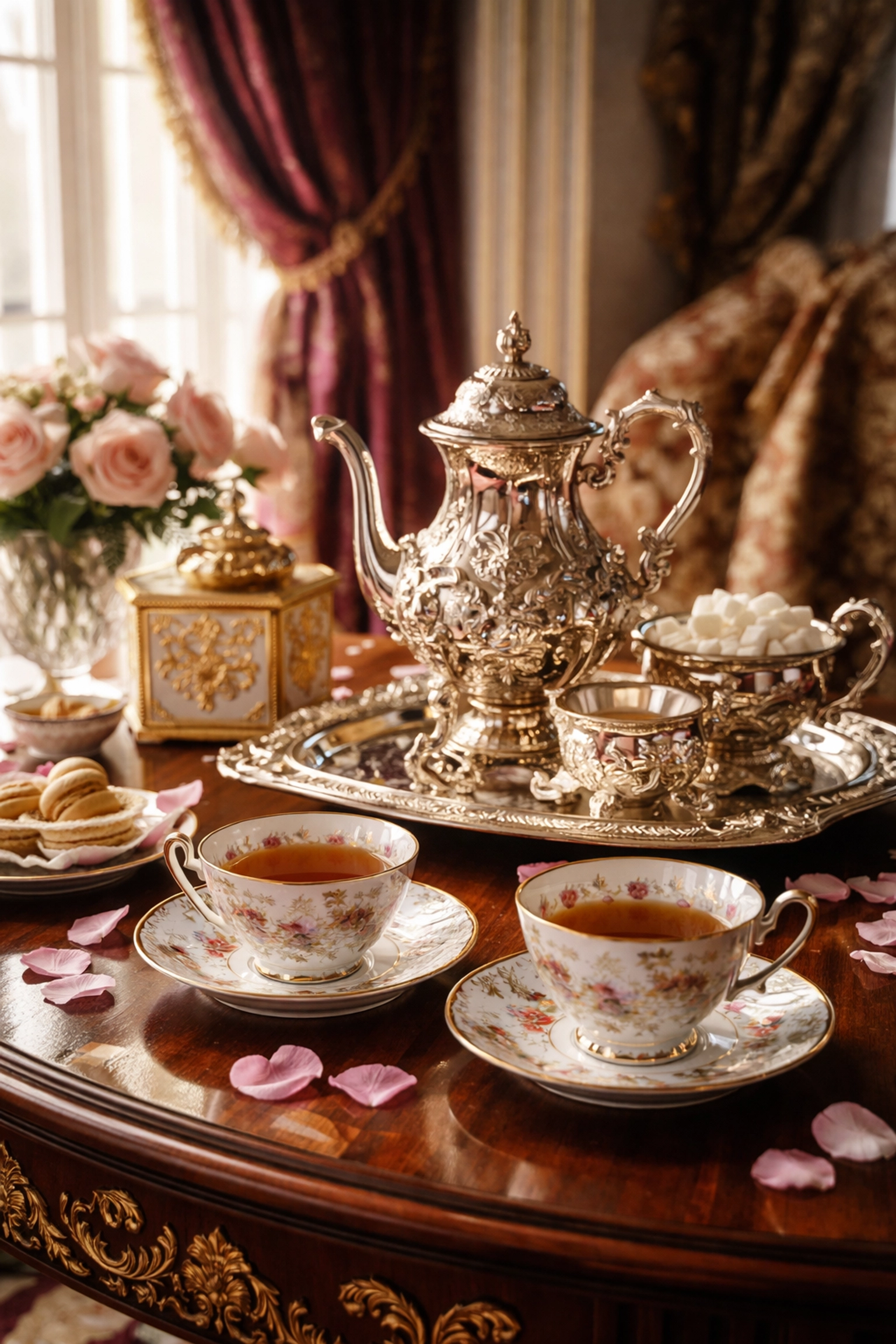
Before long, wealthy nobles were hosting elaborate tea gatherings, complete with the finest porcelain and silver tea services. These weren't casual get-togethers. They were carefully orchestrated displays of wealth and social standing, with strict protocols governing everything from how the tea was poured to who sat where.
Tea had officially become fashionable, and there was no turning back.
The Duchess Who Changed Everything: Anna Russell and Afternoon Tea
For nearly two centuries, tea remained a privilege of the upper classes, enjoyed primarily at breakfast or after dinner. But in the 1840s, one hungry duchess would transform tea-drinking into the beloved institution we know today.
Anna Russell, the seventh Duchess of Bedford, had a problem. Lunch was served around noon, but dinner wasn't until 8 p.m.: and by late afternoon, she found herself positively famished. Her solution? She began requesting a tray of tea, bread, butter, and cake be brought to her private rooms around 4 o'clock.
What started as a personal remedy for the "sinking feeling" (as she called it) soon became a social occasion. The Duchess began inviting friends to join her for these afternoon refreshments, and the custom spread like wildfire through aristocratic circles.
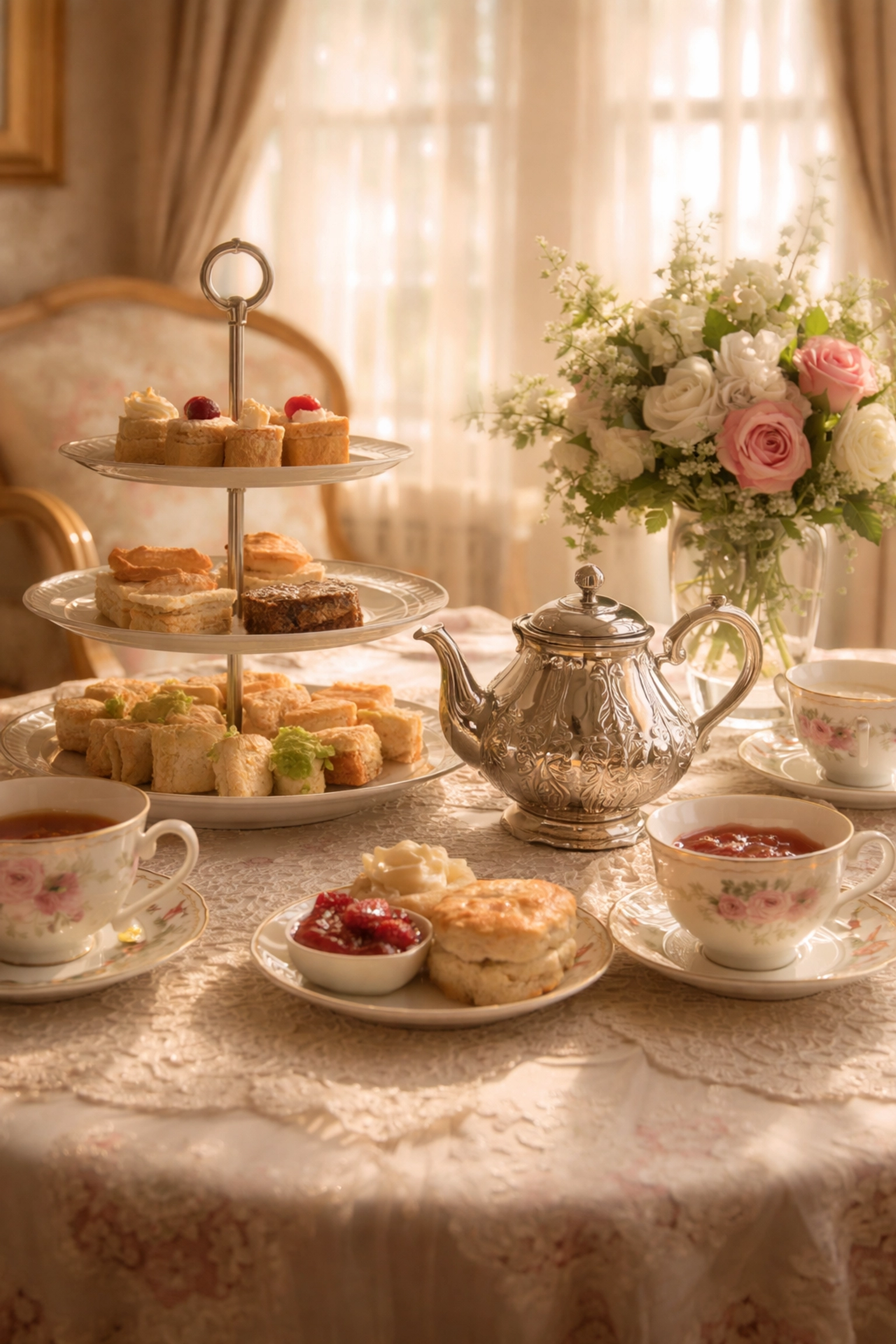
Afternoon tea quickly became the fashionable event of the day. Ladies would don their finest gowns, gather in elegant drawing rooms, and enjoy light refreshments while catching up on the latest gossip. The menu evolved to include delicate finger sandwiches, pastries, and of course, freshly baked English scones served with jam and clotted cream.
Tea for the Masses: How Tea Rooms Democratized the Tradition
For decades, afternoon tea remained an exclusive affair: if you weren't part of the aristocracy, you simply weren't invited. But that all changed in 1864 when the Aerated Bread Company opened England's first public tea room.
Suddenly, middle-class women had a respectable place to meet friends, enjoy tea and cakes, and socialize without the need for a chaperone. It was revolutionary. Tea rooms began popping up across Britain, from humble neighborhood establishments to grand hotel venues like The Ritz, Fortnum & Mason, and Brown's Hotel.
The growing middle classes embraced afternoon tea as an economical yet elegant way to entertain. The spread might be more modest than what you'd find at a duchess's estate, but the spirit was the same: good tea, delicious treats, and wonderful company.
By the early 20th century, afternoon tea had become a cherished British institution, woven into the fabric of everyday life. From grand hotels to cozy sitting rooms, the tradition united people across social classes in a shared appreciation for life's simple pleasures.
Crossing the Pond: Tea Culture Comes to America
Tea has a complicated history in America (a certain incident in Boston Harbor comes to mind), but the tradition of afternoon tea eventually found its way across the Atlantic. By the late 19th and early 20th centuries, fashionable hotels in New York, Boston, and beyond were offering elegant tea services modeled after their British counterparts.
However, it was never quite the same. Coffee culture dominated American life, and afternoon tea remained a novelty rather than a necessity. For much of the 20th century, tea parties in America were associated primarily with children's birthday celebrations or special occasions like bridal showers.
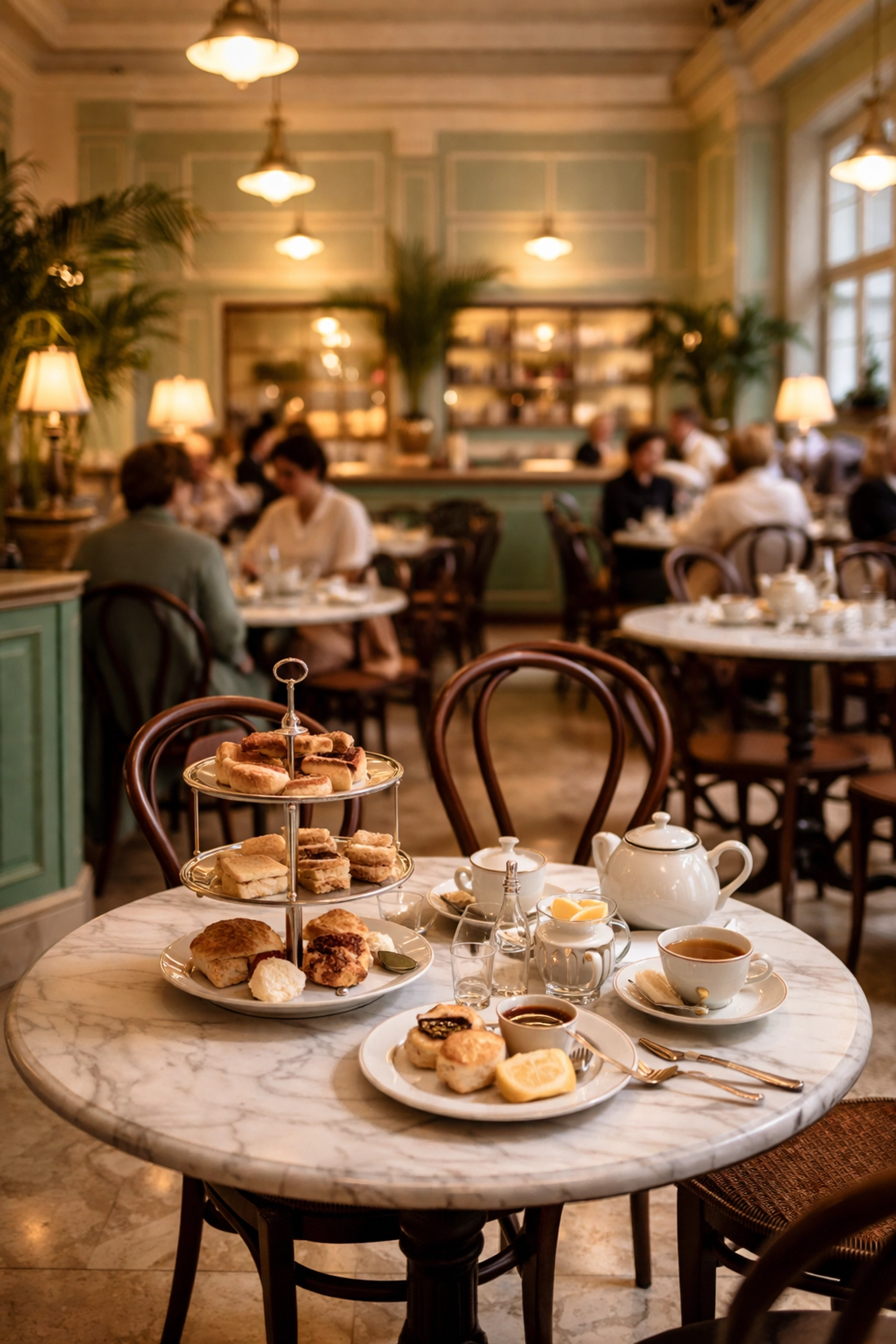
But something interesting has been happening in recent years: particularly on the West Coast.
California's Tea Party Renaissance: Why the Golden State is Embracing British Tradition
If you've noticed more tea rooms, afternoon tea menus, and British-inspired bakeries popping up around California lately, you're not imagining things. The Golden State is in the midst of a full-blown tea party renaissance.
So what's behind this trend? A few things are at play:
The Experience Economy: Today's consumers crave unique, memorable experiences over material possessions. An afternoon tea isn't just a meal: it's an event. It's Instagram-worthy elegance, a chance to slow down, and an excuse to dress up and celebrate life's little moments.
Wellness and Mindfulness: In our fast-paced, always-connected world, the ritual of afternoon tea offers something increasingly rare: permission to pause. There's something deeply restorative about sitting down with a proper pot of tea and savoring each bite of a Viennese whirl or millionaire shortbread.
British Pop Culture Influence: From "The Crown" to "The Great British Baking Show," British culture has never been more popular in America. People are curious about the traditions they see on screen: and eager to experience them firsthand.
Social Media Appeal: Let's be honest: a beautifully arranged afternoon tea spread is absolutely made for Instagram. The tiered stands, the dainty sandwiches, the pretty pastries... it's a feast for the eyes as much as the stomach.
Bringing Tradition Home: How to Experience Authentic British Tea Today
You don't need to book a flight to London (or even visit a fancy hotel) to enjoy an authentic British tea experience. Whether you're hosting friends, celebrating a special occasion, or simply treating yourself, creating your own afternoon tea is easier than you might think.
Start with the essentials:
- A proper pot of quality loose-leaf tea (English Breakfast or Earl Grey are classic choices)
- Freshly baked scones with clotted cream and jam
- A selection of finger sandwiches (cucumber, egg salad, and smoked salmon are traditional)
- Sweet treats like shortbread biscuits, Jammie Dodgers, or French macarons
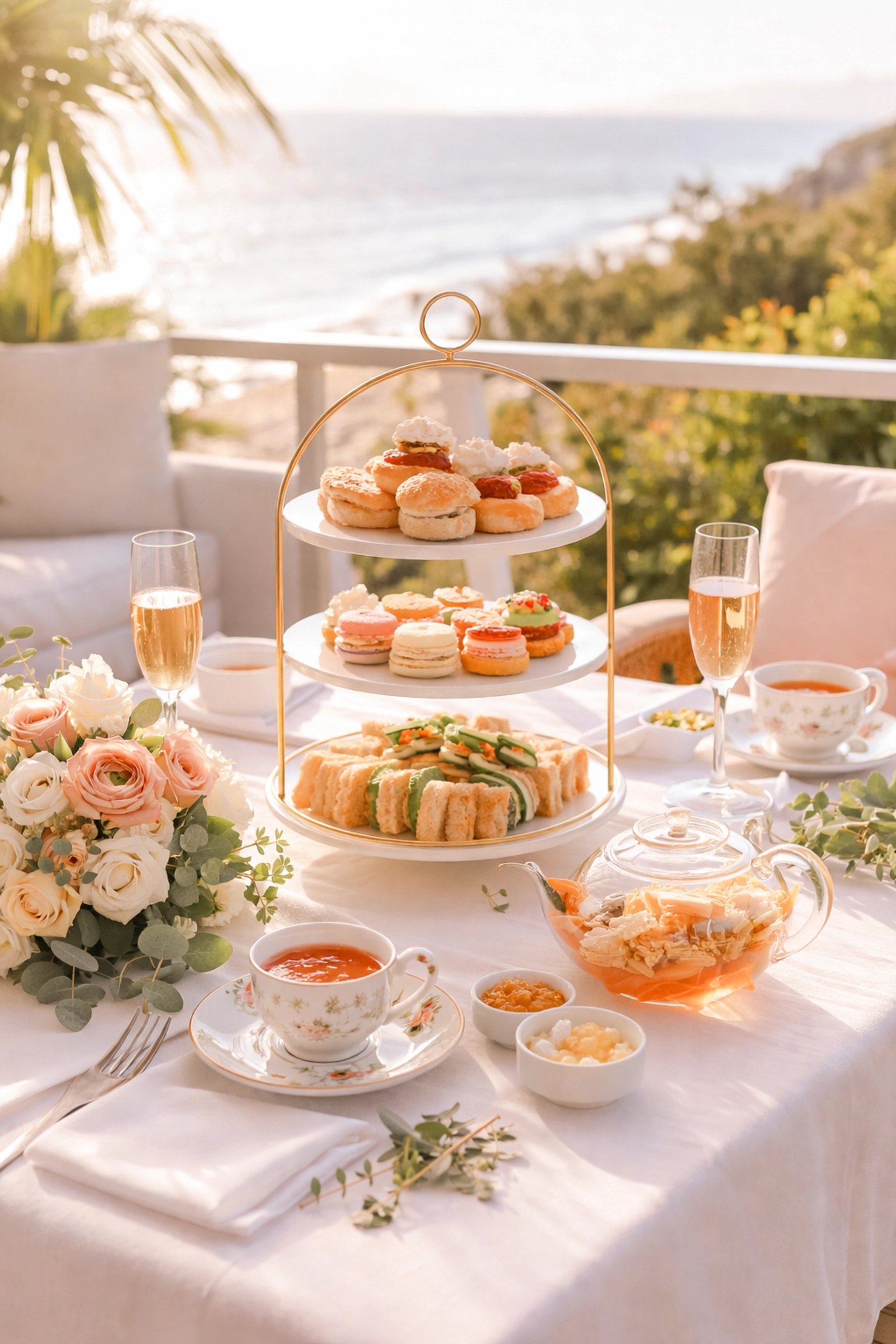
Want to make it even easier? Consider a complete Queen's Afternoon Tea for Two: all the traditional delights, expertly prepared and ready to enjoy.
A Tradition Worth Preserving
From the royal courts of Restoration England to the sunny patios of California, tea parties have journeyed far. Yet at their heart, they remain exactly what they've always been: a celebration of good food, warm company, and the simple joy of slowing down.
Whether you're a lifelong tea enthusiast or just discovering this beloved tradition, there's never been a better time to pour yourself a cup, arrange a few bourbon biscuits on a pretty plate, and experience the magic for yourself.
After all, some traditions are simply too delicious to let fade away.